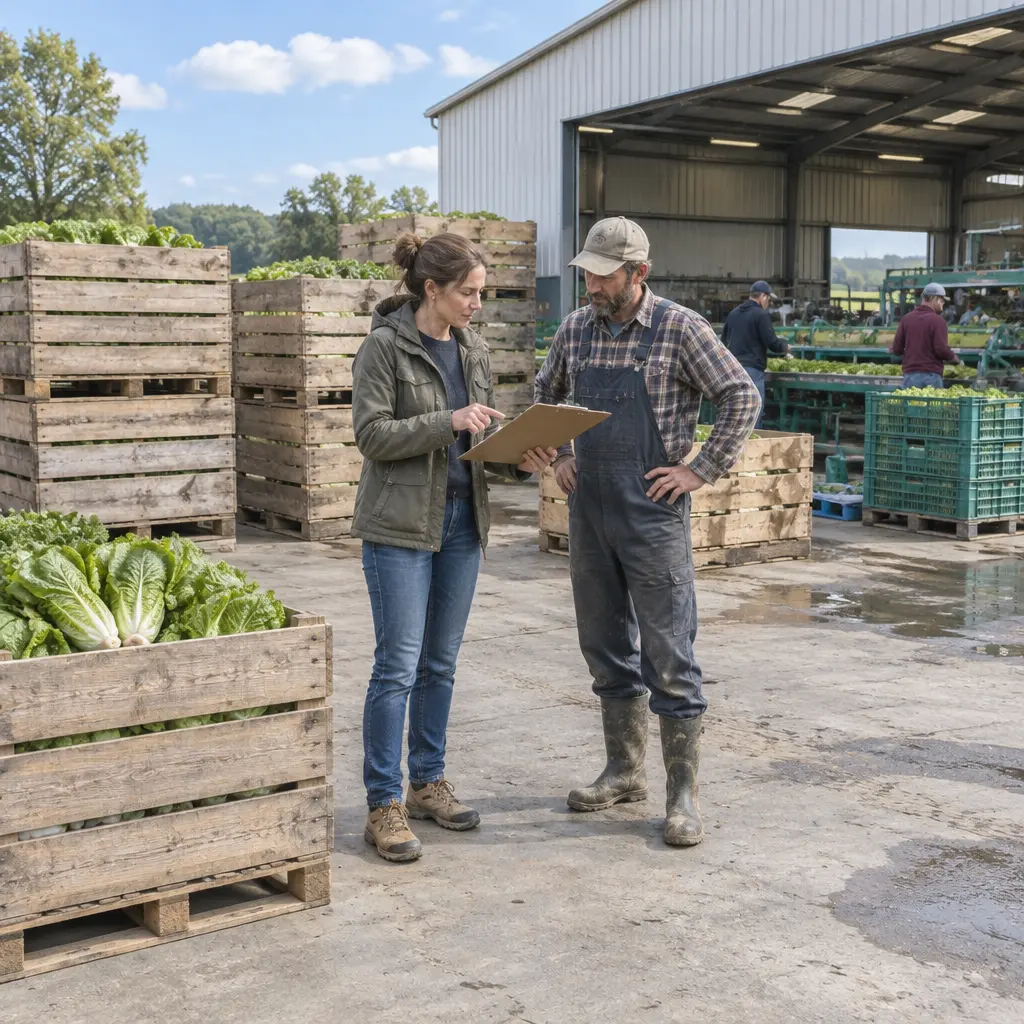
A farmer cooperative is a business owned and governed by farmers who work together to market products, obtain supplies, or provide services. For food brands, partnering with one can create a more direct route to producers and support shared goals—but it does not automatically guarantee reliable volume, traceability, fair returns, or responsible practices. Before signing, brands should examine the cooperative’s governance, capacity, quality and food-safety systems, labor and environmental practices, pricing, and ability to document product origins. Those checks matter in a sector where U.S. farms sold about $9.2 billion in certified-organic products in 2021, according to the USDA Census of Agriculture, and where buyers increasingly need credible evidence for sourcing claims.
How cooperative governance shapes a food brand partnership
A cooperative is not simply a supplier with a farmer-focused mission. The International Cooperative Alliance defines a cooperative as “an autonomous association of persons united voluntarily to meet their common economic, social, and cultural needs and aspirations through a jointly owned and democratically controlled enterprise.” That definition makes ownership and member control central features. For a food brand, governance affects who can approve a contract, how prices and surplus are handled, and how quickly the organization can make decisions.
Cooperatives vary widely: some aggregate and market members’ crops, while others process, store, or distribute products. Their structure may also vary. A traditional cooperative often gives members voting rights based on membership, while a newer or hybrid organization may use different voting or investment arrangements. Brands should verify how the specific entity operates rather than infer its practices from the word “cooperative.”
Who owns the cooperative, and who has authority to commit its members?
Ask how membership is defined, who can join, how voting works, and whether the board or management has authority to sign multi-year supply agreements. Request the bylaws, an organizational chart, and a description of the approval process. A contract with cooperative management may not mean every member is obligated to deliver a specified quantity; the agreement should make member commitments and remedies explicit.
Also ask how the cooperative reports to members and resolves disputes. The USDA Rural Development guide to cooperative development describes member ownership, democratic control, and member economic participation as core cooperative principles. These principles are useful due-diligence prompts, but they are not a substitute for reviewing the cooperative’s actual records and governing documents.
How are prices, premiums, and surplus distributed?
A brand should understand the full payment pathway from its invoice to the farmer’s final return. Ask how the cooperative sets the member price, calculates deductions for grading, storage, transport, or processing, and distributes any year-end surplus. If a contract promises an organic, regenerative, or other sourcing premium, establish how that premium is calculated and what evidence shows it reached participating producers.
Request sample settlement statements and a written explanation of payment timing. Clarify how the cooperative handles rejected loads, price changes, and costs caused by product specifications. Transparent formulas reduce the risk that a brand’s sourcing premium becomes an unverified marketing claim rather than a measurable benefit to farmers.
How cooperative supply capacity affects sourcing reliability
Supply capacity is the cooperative’s demonstrated ability to deliver the required product, volume, quality, and timing—not merely its stated production potential. Aggregation can help small and mid-sized farms reach larger buyers, but weather, crop cycles, member participation, infrastructure, and competing commitments can all affect fulfillment. The USDA’s 2022 Census of Agriculture counted about 1.9 million U.S. farms, illustrating the scale and diversity of the farm sector; a brand must still assess the particular farms and facilities behind a proposed supply program.
Treat capacity as a combination of field production, post-harvest handling, processing, storage, and logistics. A cooperative may have enough crop in the field but lack adequate cooling, packing, or transport capacity to meet a brand’s delivery window. The most relevant evidence is historical performance and a documented operating plan.
What volume is committed, and what happens when a crop falls short?
Ask for several years of production and delivery history by product, grade, season, and member farm, where available. Compare forecasted volumes with actual shipments, rejects, and shortfalls. The contract should distinguish between forecast estimates and firm commitments and explain how allocations work if supply is constrained.
Discuss contingency plans for drought, floods, pest pressure, labor shortages, or equipment failures. Options may include approved substitute farms, alternate regions, flexible delivery windows, or pre-agreed product substitutions. The USDA’s 2022 Census of Agriculture reported that U.S. farms experienced substantial operating expenses and changing production conditions; historical averages alone cannot guarantee a future harvest, so scenario planning is essential.
Can facilities and logistics meet the brand’s operating needs?
Map the product’s route from farm to receiving dock, including aggregation points, storage, processing, packaging, and transport providers. Confirm capacity during peak harvest, temperature controls where required, backup equipment, and responsibility for freight and product loss. Ask to see facility audits, maintenance records, and service agreements relevant to the product.
For perishable products, delivery frequency and cold-chain performance may matter as much as total annual volume. Agree on specifications for packaging, palletization, shelf life, and delivery appointments before the first shipment. A pilot order can test those arrangements without exposing either party to the full risk of a large rollout.
How traceability and food safety support a cooperative partnership
Traceability is the ability to follow food through relevant production, handling, processing, and distribution steps. Food safety is the system of controls used to prevent or reduce hazards. They are related but distinct: a product can be traceable without being safe, and a food-safety program is difficult to verify if records cannot connect lots to their sources.
The U.S. Food and Drug Administration’s Food Traceability Rule establishes additional recordkeeping requirements for certain foods on the Food Traceability List. The rule uses key data elements associated with critical tracking events; covered businesses should confirm applicable requirements and current compliance timelines with qualified counsel or regulatory specialists. Even when a product is not covered by that rule, brands can set appropriate traceability and recall expectations in their contracts.
Can each shipment be traced to farms, fields, and handling events?
Ask what information accompanies each lot: farm or member identifier, harvest date, product and grade, packing or processing location, and shipment details. Find out whether records are digital, how quickly they can be retrieved, and whether the cooperative has tested its trace-back process. A mock recall can reveal gaps that a written policy may miss.
The FDA’s traceability framework emphasizes records that link products across supply-chain events. Brands should define the records they need, the format and retention period, who can access them, and how quickly the cooperative must respond to a traceability request. If the product is blended or aggregated, confirm how the cooperative preserves the connection between the finished lot and its contributing farms.
What food-safety controls and certifications are in place?
Request the cooperative’s food-safety plan, audit results, corrective-action records, sanitation procedures, water-testing practices where relevant, and recall contacts. Ask which members and facilities are covered by each certification or audit; a certificate held by one packing site does not necessarily cover every farm supplying the cooperative.
The Food Safety Modernization Act’s Produce Safety Rule sets science-based minimum standards for the safe growing, harvesting, packing, and holding of covered produce, subject to provisions and exemptions. Brands should verify which requirements apply to the farms and activities in their supply chain and check that documentation is current. Certifications can support assurance, but they do not replace a brand’s own supplier approval and risk assessment.
How farmer, labor, and environmental practices affect sourcing claims
A cooperative’s collective structure may make it easier to coordinate training or shared services, but membership alone does not prove that a product is fair, organic, regenerative, or environmentally beneficial. Each claim needs a defined standard, evidence, and a clear chain of custody. This is especially important when a brand uses sourcing language on packaging or in advertising.
The USDA National Organic Program, for example, sets requirements for certified organic production and handling. Organic certification is a specific, regulated claim; terms such as “sustainable” or “regenerative” can have different meanings across programs and buyers. Brands should identify the standard they intend to use and avoid implying certification or outcomes that have not been verified.
What evidence supports environmental or certification claims?
Ask which farms and products are covered by certifications, who verifies compliance, when audits occur, and how exceptions are handled. For environmental claims, define measurable indicators such as soil-cover practices, water-use methods, habitat measures, or input-management records. Establish a baseline and reporting period so that progress can be distinguished from an unsubstantiated benefit claim.
USDA organic certification provides an example of a documented system: operations subject to the National Organic Program generally work with an accredited certifying agent and maintain records demonstrating compliance. If the brand plans to make an organic claim, it should verify the product’s certification status and labeling requirements rather than relying on a cooperative-wide description.
How are workers and member farmers treated?
Ask about worker protections, health and safety training, grievance channels, hiring practices, and how the cooperative monitors labor conditions at member farms and facilities. Clarify whether the cooperative has a written code of conduct, how allegations are investigated, and what remediation looks like. For farmer members, review payment schedules, contract fairness, access to services, and whether smaller or newer members can participate on equitable terms.
The International Labour Organization identifies principles such as freedom of association, elimination of forced labor, abolition of child labor, and non-discrimination as fundamental rights at work. A brand should translate relevant principles into practical supplier expectations and due-diligence procedures, while recognizing that local laws and supply-chain risks differ.
How commercial terms and communication make the partnership durable
A durable partnership requires clear commercial terms, practical communication, and a way to resolve problems before they become disputes. Cooperative partners may represent many farms, while a brand may coordinate across procurement, quality, legal, sustainability, and marketing teams. Naming accountable contacts on both sides helps prevent important information from being lost between functions.
Are specifications, pricing, and payment terms workable for both sides?
Document product specifications, acceptable tolerances, sampling and rejection procedures, price-review triggers, payment dates, and the process for disputed invoices. Ask whether the cooperative needs pre-season financing, input advances, or a minimum purchase commitment to plan production. If the brand requests changes to varieties, packaging, or harvest timing, assess who bears the resulting costs and risks.
A fair agreement should make obligations reciprocal and legible. For example, a volume commitment from the cooperative may be paired with a buyer forecast, purchase schedule, or defined process for revising orders. These details can reduce uncertainty for farmers while helping the brand plan inventory and production.
How will performance and disagreements be managed?
Set a regular review schedule and agree on a small set of measurable indicators, such as on-time delivery, fill rate, rejection rate, traceability response time, payment timeliness, and member participation in the program. Include a process for corrective actions, escalation, and contract changes. Indicators should be useful for improvement, not just compliance reporting.
Before launch, ask how the cooperative communicates with members when forecasts change or product is rejected. Agree on who can make operational decisions, who must be consulted, and how urgent issues are handled during harvest. A shared operating calendar and a pilot shipment can expose misunderstandings early.
Questions to ask before signing with a farmer cooperative
Use these questions to structure discovery, site visits, and contract review. The answers should be supported by documents or observed practices, not only verbal assurances.
- Who owns the cooperative, and who has authority to approve supply commitments?
- How are member prices, deductions, premiums, and surplus distributions calculated?
- What are the actual volumes delivered in recent seasons, and how are shortfalls allocated?
- Which farms, facilities, and logistics providers will handle the product?
- Can each lot be traced to its contributing farms and handling events, and has the system been tested?
- Which food-safety plans, audits, certifications, and corrective-action records apply to the product?
- What evidence supports organic, environmental, labor, or farmer-benefit claims?
- How do payment timing, rejection rules, price changes, and force-majeure provisions work?
- What measures will both parties review, and how will disputes or performance gaps be addressed?
Conclusion: Make the partnership verifiable and mutually workable
Before partnering with a farmer cooperative, a food brand should verify governance and member economics, test supply and logistics capacity, review traceability and food-safety systems, substantiate social and environmental claims, and negotiate practical commercial terms. The cooperative’s identity can offer a meaningful model of farmer ownership, but reliable sourcing depends on evidence, clear responsibilities, and a fair operating relationship.
Start with document review and conversations with cooperative leadership and members, then visit relevant farms or facilities and run a pilot shipment. For further action, align procurement, quality, legal, and sustainability teams on a shared supplier checklist and consult current USDA and FDA guidance for applicable requirements. A well-designed partnership can strengthen supply resilience while making the benefits and obligations visible to both the brand and the farmers.
Sources: International Cooperative Alliance, Cooperative identity, values and principles, https://ica.coop/en/cooperatives/cooperative-identity; USDA National Agricultural Statistics Service, 2022 Census of Agriculture, https://www.nass.usda.gov/Publications/AgCensus/2022/; USDA National Agricultural Statistics Service, 2021 Organic Survey, https://www.nass.usda.gov/Publications/AgCensus/2022/Online_Resources/Organics/; USDA Rural Development, Cooperative Services, https://www.rd.usda.gov/programs-services/all-programs/cooperative-services; U.S. Food and Drug Administration, FSMA Final Rule on Requirements for Additional Traceability Records for Certain Foods, https://www.fda.gov/food/food-safety-modernization-act-fsma/fsma-final-rule-requirements-additional-traceability-records-certain-foods; U.S. Food and Drug Administration, Standards for the Growing, Harvesting, Packing, and Holding of Produce for Human Consumption, https://www.fda.gov/food/food-safety-modernization-act-fsma/fsma-final-rule-produce-safety; USDA Agricultural Marketing Service, National Organic Program, https://www.ams.usda.gov/about-ams/programs-offices/national-organic-program; International Labour Organization, ILO Declaration on Fundamental Principles and Rights at Work, https://www.ilo.org/declaration/lang–en/index.htm