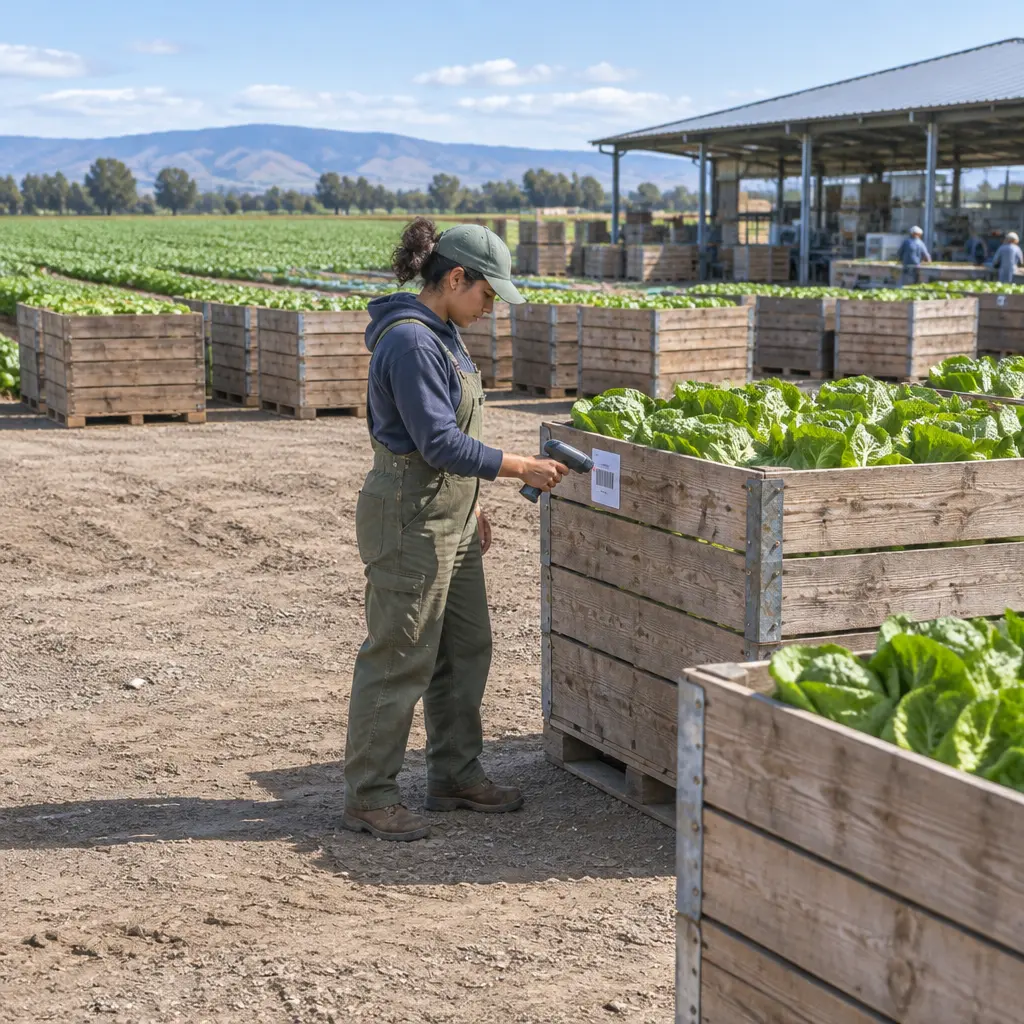
Agricultural cooperatives are member-owned organizations that pool resources to market, process, or supply agricultural products. They are using digital records, sensors, and data-sharing systems to make ingredient traceability faster and more reliable—from a farm’s field or herd through processing and distribution. This matters as food businesses face growing demands to verify origin, production practices, and handling: the U.S. Food and Drug Administration’s Food Traceability Rule, for example, requires covered firms to maintain additional records for certain foods and provide information to the agency within 24 hours of a request. Cooperatives can make those requirements more manageable by connecting member-level records with lot codes, laboratory results, and shipment data, while still addressing practical concerns such as cost, connectivity, privacy, and interoperability.
How agricultural cooperatives use AgTech for ingredient traceability
Ingredient traceability is the ability to follow a food ingredient’s movement and relevant history through defined stages of production, processing, and distribution. The Codex Alimentarius Commission describes traceability as the ability to follow the movement of a food through specified stages of production, processing, and distribution. In cooperative supply chains, AgTech means applying digital and data-enabled tools to collect, link, verify, and share those records across member farms and downstream businesses.
The cooperative structure offers a distinctive advantage: a central organization can coordinate standards and technology for many independent producers, while members contribute records from their own operations. The resulting system may combine farm-management software, animal or field identification, scales and sensors, laboratory testing, processing records, and shipment documentation. Traceability is not the same as a claim that a product is organic, sustainable, or safe; it supplies evidence that can help substantiate such claims and support investigations when a problem occurs.
Why traceability has become more urgent
Food traceability helps businesses identify affected lots, investigate hazards, and narrow the scope of a recall. The FDA’s Food Traceability Rule applies additional recordkeeping requirements to foods on its Food Traceability List and to specified activities involving those foods. Covered entities must be able to provide required records to FDA within 24 hours of a request, or within another reasonable time agreed with the agency. The rule establishes data requirements; it does not require every food business to adopt blockchain or any particular software.
The scale of U.S. foodborne illness also explains the public-health stakes. The Centers for Disease Control and Prevention estimates that each year about 48 million people get sick, 128,000 are hospitalized, and 3,000 die from foodborne diseases. Better records cannot prevent every outbreak, but connected, searchable lot data can help investigators and businesses trace implicated ingredients more efficiently.
Digital records improve cooperative ingredient traceability
Digital traceability is the structured recording and linking of product identity, events, and custody information in electronic systems. The FDA’s traceability framework uses Critical Tracking Events (CTEs)—such as harvesting, cooling, initial packing, shipping, receiving, and transformation—and Key Data Elements (KDEs), the details recorded for those events. For a cooperative, the practical task is to connect members’ production records to the cooperative’s aggregation, processing, and sales records without losing the identity of the relevant lot.
The technology is best understood as a set of complementary tools, not a single platform. A barcode may identify a lot, a sensor may record temperature, and a farm-management system may document where and when a crop was harvested. Each contributes useful evidence only if records use compatible identifiers, are entered accurately, and can be retrieved by authorized users.
Farm-level data capture and lot identification
Farm-level data capture records the origin and production events associated with an ingredient before it enters a cooperative facility. Depending on the commodity, records can include field or block, harvest date, input applications, animal identity, milk collection, supplier, and delivery time. QR codes, barcodes, RFID tags, and digital forms can attach those records to a lot or shipment.
A lot code is useful only when the organization can reliably connect it to the records behind it. Cooperatives therefore need agreed rules for creating identifiers, combining or splitting lots, and recording transformations—for example, when milk from several farms enters a tank or grain from multiple members is blended. GS1’s global standards, including the Global Traceability Standard and identifiers such as the Global Trade Item Number and Global Location Number, offer common ways to identify products and locations across business systems.
Sensors, connected equipment, and cold-chain records
Internet of Things (IoT) tools are network-connected devices that capture or transmit data, including temperature, humidity, location, and equipment status. In ingredient supply chains, sensors can document storage and transport conditions for products that require controlled handling. Weighing equipment and automated processing systems can also create timestamped records that help reconcile quantities received, processed, and shipped.
Sensor readings strengthen traceability when they are linked to the correct lot, location, and time period. A temperature log that cannot be associated with a specific shipment is less useful during an investigation. Cooperatives should also plan for calibration, device maintenance, connectivity gaps, and procedures for reviewing alerts rather than assuming automated data are automatically accurate.
Cloud platforms and interoperable data exchange
Cloud-based traceability platforms store records on remote infrastructure and make them accessible to approved users, such as member farms, cooperative staff, processors, and buyers. Application programming interfaces and shared data standards can reduce repeated manual entry by allowing separate systems to exchange information. Interoperability is especially important when a cooperative buys from many members and sells to customers using different software.
A distributed ledger or blockchain can provide a shared, append-only record of transactions among participants, but it does not verify that the original information was true. The National Institute of Standards and Technology explains blockchain as a distributed ledger in which records are linked and protected against alteration through cryptographic methods. For cooperatives, the key design question is whether a ledger solves a real coordination or audit problem better than a well-governed database. Data standards, access controls, and reliable source records matter in either case.
Cooperative governance connects member farms to verified ingredient histories
Cooperative traceability governance is the set of shared rules that determines what members record, how records are checked, who can access them, and how the cooperative responds to errors or incidents. Its defining feature is collective coordination: a cooperative can establish common data fields and procedures across members while preserving member ownership and participation. This makes governance as important as the technology itself.
A cooperative’s scale can help spread training and technology costs across many producers, but it also makes consistent participation essential. If some members use paper forms, others use incompatible applications, and others omit required events, the system may have gaps at precisely the points where records need to connect. Clear membership policies, assistance, and proportionate verification can help build dependable records without treating every farm as if it has the same technical capacity.
Shared data standards and member participation
A shared data standard defines the fields and formats members use to describe products, locations, events, and business partners. A cooperative might specify how members report field identifiers, harvest dates, delivery quantities, or animal and milk-batch information. Standardization makes it easier to combine records and answer a buyer’s or regulator’s traceability request.
Participation depends on making data collection practical. Mobile forms, offline-capable applications, equipment integrations, and multilingual training can reduce the burden of recordkeeping. The USDA’s 2022 Census of Agriculture counted about 1.9 million farms in the United States, illustrating the diversity of operations involved in agricultural supply chains. A traceability program designed for large, highly connected farms may not work equally well for small or remote members.
Verification, audit trails, and food-safety response
Verification checks whether recorded information is complete, plausible, and supported by evidence. Cooperatives can compare member delivery records with scale tickets, processing yields, invoices, laboratory results, and sensor data. An audit trail records who entered or changed information and when, supporting accountability and investigation.
The operational test is whether the cooperative can trace one step back to the supplier and one step forward to the next recipient, then identify related lots when ingredients are transformed or combined. Mock recalls can test this capability before an actual incident. Records should be searchable and exportable in a form that meets applicable regulatory and customer requirements, rather than locked in a system that only one vendor can interpret.
Data ownership, privacy, and cybersecurity
Agricultural data governance clarifies who owns, controls, uses, and shares farm-generated information. Cooperative agreements should state which data are collected, why they are needed, who may see them, how long they are retained, and whether they can be used for purposes beyond traceability. Limiting access by role can let buyers see shipment and origin details without exposing unrelated farm business information.
Cybersecurity is also a traceability issue: lost, altered, or unavailable records can undermine confidence during a recall or audit. The National Institute of Standards and Technology Cybersecurity Framework recommends managing cybersecurity risk through functions that include Govern, Identify, Protect, Detect, Respond, and Recover. Cooperatives can apply these principles through multifactor authentication, backups, vendor assessments, staff training, incident plans, and routine access reviews.
Commodity-specific applications show where AgTech adds value
The data required for ingredient traceability vary by commodity because production and processing differ. A dairy cooperative may need to connect farm, pickup, tank, and processing-batch information; a grain cooperative may track field, harvest, storage bin, and blending records; and a produce cooperative may link field, harvest crew, packing line, and shipping lot. These are examples of system designs, not claims that every cooperative uses the same technology or has achieved a particular outcome.
The FDA Food Traceability List includes specified foods such as fresh leafy greens, certain cheeses, shell eggs, and fresh-cut fruits and vegetables. Applicability depends on the food and the activity performed, so cooperatives should assess the rule against their particular products and operations. Commodity-specific workflows can then connect the relevant regulatory records with the cooperative’s existing quality and commercial data.
Dairy: linking farm pickup to processing batches
In dairy, electronic milk records can connect a member farm and collection time with a tanker, receiving silo, and processing batch. A cooperative may combine pickup tickets, volume and quality measurements, laboratory results, and processing logs to identify which incoming milk contributed to a finished ingredient. That linkage can support supplier verification and help define the scope of an investigation if a quality issue arises.
The U.S. Department of Agriculture’s National Agricultural Statistics Service reported 9.45 million milk cows on U.S. farms as of January 1, 2024. The scale of the sector underscores why digital matching of farm, load, and plant records can be valuable, while also highlighting the need for reliable procedures when milk from multiple suppliers is pooled.
Grain: tracking field, storage, and blended lots
Grain traceability follows identity-preserved lots from field or farm delivery through receiving, drying, storage, blending, and shipment. Digital scale tickets, bin-management records, location identifiers, and laboratory results can help document where a lot came from and how it was handled. When grain is commingled, accurate transformation records are essential: the system must show which source lots entered a new composite lot and where that output went.
Cooperatives can use these records to support customer specifications and origin documentation, but traceability does not by itself certify a grain’s quality, sustainability, or production method. Those conclusions require defined criteria and suitable verification evidence in addition to the chain-of-custody record.
Produce: recording harvest, packing, and shipment events
Produce traceability can connect a growing area and harvest date with packing, cooling, case labeling, and shipment records. Digital field maps, harvest labels, packing-line scans, and temperature logs can help preserve lot identity as produce moves from farm to buyer. For leafy greens and other foods covered by applicable FDA requirements, the system should be configured to capture the relevant KDEs for each applicable CTE.
An illustrative workflow is to assign a harvest lot identifier in the field, scan it at the packing line, record any transformation or case-level identifier, and link the cases to a shipment and recipient. The value is not simply more data: it is the ability to retrieve a coherent history quickly and distinguish affected lots from products that are not implicated.
Benefits and implementation challenges shape AgTech adoption
AgTech can make cooperative ingredient traceability more searchable, consistent, and responsive, but successful adoption depends on fit between technology, member operations, and customer or regulatory needs. The principal benefits include faster lot identification, less duplicate entry, clearer origin evidence, and stronger coordination across supply-chain partners. The main challenges include upfront and ongoing costs, uneven connectivity, inconsistent data, cybersecurity risks, and dependence on vendors or proprietary formats.
Operational and commercial benefits
Connected records can reduce the time staff spend searching paper files and reconciling spreadsheets, especially when a cooperative needs to identify suppliers or recipients for a particular lot. Better visibility can also support product differentiation when customers request verified origin or production information. These benefits depend on accurate data and meaningful controls; digitizing incorrect or incomplete records simply makes errors easier to transmit.
A useful performance dashboard can track the percentage of lots with complete required records, the time needed to trace a lot from source to recipient, the rate of data-entry errors, and the proportion of members participating. Such metrics let cooperatives evaluate the system based on operational outcomes rather than the number of devices or software features purchased.
Costs, connectivity, and interoperability
Implementation costs can include software subscriptions, devices, integration, staff time, training, data cleanup, and ongoing support. Rural connectivity gaps and older equipment may make real-time data collection difficult. A phased approach—starting with a high-priority ingredient or customer requirement—can help a cooperative learn before expanding the system across all members.
Interoperability prevents a cooperative from creating an isolated digital record that cannot travel with the product. Before selecting a platform, organizations can ask vendors how data are exported, which standards are supported, how records link to customer systems, and what happens if the cooperative changes providers. Open, documented formats and clear data ownership provisions reduce the risk of lock-in.
A practical adoption roadmap
A cooperative can begin by mapping product flows and identifying the records required at each handoff. It can then agree on common identifiers and minimum data fields, choose a pilot commodity or facility, test the process with representative members, and conduct mock trace exercises. After the pilot, the cooperative can address data gaps and training needs before scaling.
- Map ingredient movement, transformations, and existing records from member to customer.
- Define the traceability objective, applicable rules, required data, and member access protections.
- Select technology based on usability, interoperability, exportability, security, and total cost.
- Train participants and test record completeness with mock recalls or trace exercises.
- Measure retrieval time, record accuracy, participation, and system costs, then improve the workflow.
Conclusion: cooperative AgTech makes ingredient histories more actionable
Cooperatives are using AgTech to connect farm-level production information with processing and distribution records through digital identifiers, sensors, cloud platforms, and shared data standards. FDA traceability requirements and the continuing public-health burden of foodborne illness make timely, reliable records increasingly important. Commodity-specific workflows show how the same principles apply to dairy, grain, and produce, while cooperative governance determines whether member data are consistent, secure, and useful.
Technology alone does not guarantee traceability. Cooperatives should pair appropriate tools with clear data rules, member training, verification, cybersecurity, and interoperable records. For further action, map one ingredient’s journey, test a lot-level trace exercise, and consult FDA guidance, GS1 standards, and trusted agricultural technology advisers before choosing a platform.
Sources: Codex Alimentarius Commission, Principles for Traceability/Product Tracing as a Tool Within a Food Inspection and Certification System, CAC/GL 60-2006, https://www.fao.org/input/download/standards/10603/CXG_060e.pdf; U.S. Food and Drug Administration, Food Traceability Rule, https://www.fda.gov/food/food-safety-modernization-act-fsma/food-traceability-rule; U.S. Food and Drug Administration, Food Traceability List, https://www.fda.gov/food/food-safety-modernization-act-fsma/food-traceability-list; Centers for Disease Control and Prevention, Burden of Foodborne Illness: Findings, https://www.cdc.gov/foodborneburden/2011-foodborne-estimates.html; GS1, Global Traceability Standard, https://www.gs1.org/standards/traceability; National Institute of Standards and Technology, Blockchain Technology Overview, https://nvlpubs.nist.gov/nistpubs/ir/2018/NIST.IR.8202.pdf; U.S. Department of Agriculture, National Agricultural Statistics Service, 2022 Census of Agriculture, https://www.nass.usda.gov/Publications/AgCensus/2022/; U.S. Department of Agriculture, National Agricultural Statistics Service, Milk Production, Disposition, and Income 2023 Summary, https://www.nass.usda.gov/Publications/Todays_Reports/reports/milkprod.pdf; National Institute of Standards and Technology, Cybersecurity Framework 2.0, https://www.nist.gov/cyberframework.