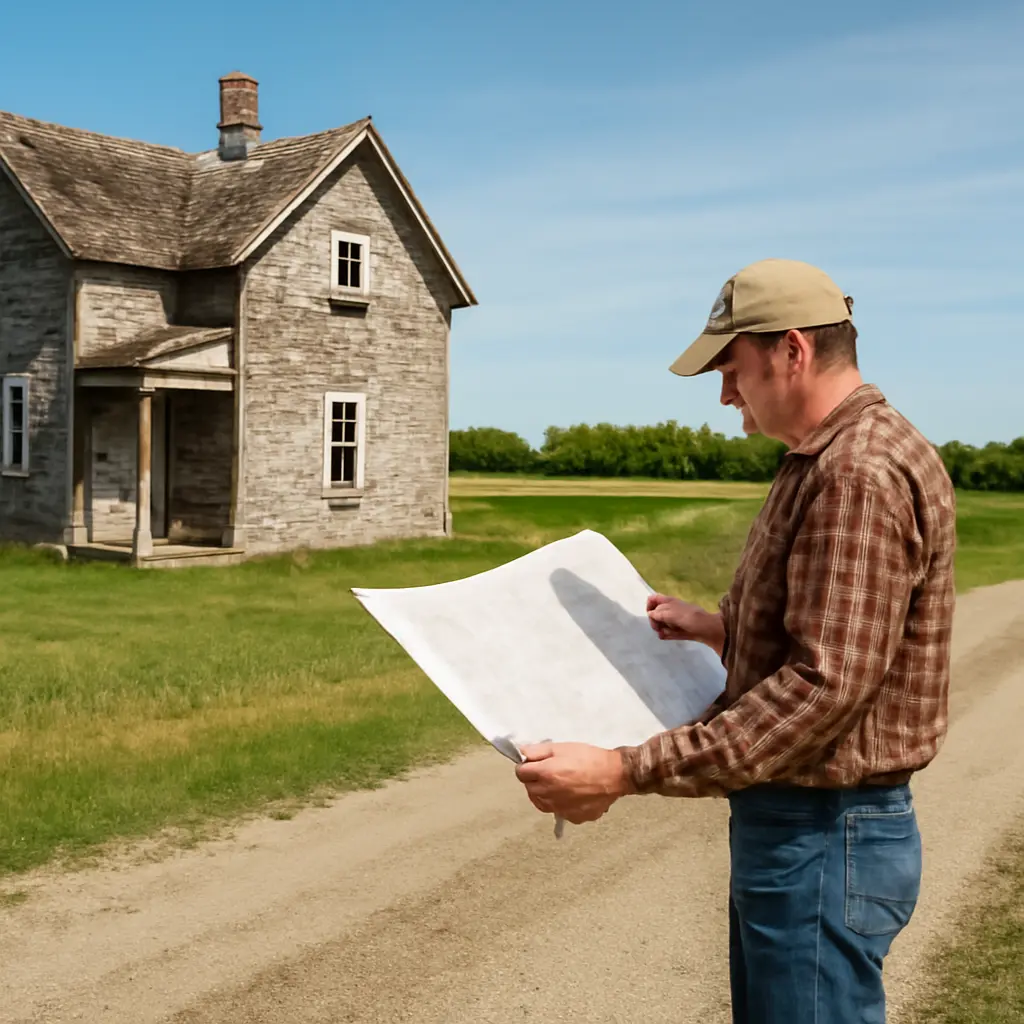
Land ownership can persist within a family through booms, recessions, and generations because land is both an asset and a place people live, work, and identify with. Family land retention means keeping property under household or shared family control rather than selling it, often through inheritance, continued use, and decisions that delay or avoid a sale. The pattern is not universal: taxes, debt, development pressure, disputes, and changing livelihoods can break it. But evidence helps explain its durability. The U.S. Department of Agriculture’s 2022 Census of Agriculture counted 880 million acres of farmland, while the Federal Reserve’s 2022 Survey of Consumer Finances found that 66.1% of U.S. families owned their primary residence. This article examines how inheritance, land’s distinctive economics, household strategies, and policy shape intergenerational ownership—and why market swings do not automatically lead families to sell.
Family land retention: definition and scale
Family land retention describes the continued ownership or control of land by people connected through kinship, commonly across more than one generation. It may involve a farm, a home, rental property, woodland, or land held jointly by relatives. The term is descriptive rather than a single legal category: a family may own property directly, through a trust, or through a business entity.
The USDA’s 2022 Census of Agriculture reported 1.9 million farms operating 880 million acres in the United States. Those figures show the continuing importance of agricultural land, but they do not mean that every farm is family-owned or that all farmland passes intact between generations. The USDA defines a farm for census purposes as a place that produced and sold, or normally would have sold, at least $1,000 in agricultural products during the census year.
Family land retention includes several related forms: inherited ownership, continued family operation, co-ownership among heirs, and land kept for residential or cultural use. These categories can overlap, but they are not identical. A family can retain title while leasing the land to another operator, for example, or a family business can operate farmland it does not own.
Inherited ownership and family operation
Inherited ownership occurs when land passes from one generation to another through a will, trust, or state inheritance law. Family operation means relatives continue to use or manage the property, whether or not every owner works on it. Keeping both ownership and operation together can preserve decision-making within the family, but succession requires planning: a farm or house may have multiple heirs, while the property itself cannot always be divided without losing value or usefulness.
The USDA’s 2022 Census of Agriculture reported that 38% of U.S. agricultural producers were female, reflecting the range of people involved in farm ownership and operation. The statistic does not identify every family’s inheritance arrangements, but it illustrates why succession planning should account for diverse roles rather than assume a single heir or a single household member will take over.
Shared title and heirs’ property
Heirs’ property generally refers to land inherited by multiple relatives, often without a clear, individually recorded title for each person. The arrangement can keep land within a family, but it may make it difficult to obtain financing, qualify for some assistance programs, sell a defined portion, or resolve disagreements. The U.S. Department of Agriculture has identified heirs’ property as an issue for agricultural producers, while state laws and procedures vary.
Shared ownership can also become vulnerable when an outside buyer acquires one heir’s fractional interest and seeks a court-ordered partition. The Uniform Law Commission’s Uniform Partition of Heirs Property Act, approved in 2010, offers states a framework that can provide notice, an opportunity for co-owners to buy out a selling heir, and appraisal-based procedures before a forced sale. Adoption and implementation depend on state law.
Land’s economic attributes support long-term household ownership
Land differs from many financial assets because it is fixed in place, limited in supply, and capable of providing use as well as potential income. The American economist Henry George argued in Progress and Poverty (1879) that land is a distinct source of economic value because its supply cannot be increased in response to demand. In practice, the value of a particular parcel also depends on location, permitted uses, infrastructure, soil, and access to markets.
That combination helps explain why families may hold land through price cycles. A market decline can reduce a parcel’s sale price without ending its usefulness as a home, farm, rental, or place of family gathering. Conversely, rising prices can make selling attractive but may also increase the cost of buying comparable property nearby. The following attributes connect land’s market behavior to household decisions.
Fixed supply, location, and use value
Land is immobile: its location cannot be moved to follow a better market. Its value therefore depends heavily on local conditions, such as jobs, roads, water, zoning, schools, and agricultural productivity. A parcel can generate rent or crops, provide housing, or support family activities even when its market price fluctuates.
The USDA’s 2023 Land Values Summary estimated the average U.S. farm real estate value at $4,080 per acre, a 7.4% increase from 2022; average cropland value was $5,460 per acre. These national averages mask substantial regional differences and do not predict the value of any individual parcel. They do show that land prices can change materially while the underlying land remains in place and continues to serve practical purposes.
Income, collateral, and intergenerational wealth
Land can produce income through farming, leasing, or housing, and it may serve as collateral for borrowing. Those possibilities can make retention financially useful, but they also introduce risk: a loan secured by land can expose the property to foreclosure if payments cannot be made. Families therefore weigh expected income and future options against taxes, maintenance, debt, and the opportunity cost of holding the asset.
Residential property is especially significant in household balance sheets. The Federal Reserve’s 2022 Survey of Consumer Finances found that 66.1% of families owned their primary residence. The survey also found substantial differences in homeownership by income and wealth, so housing’s role as a wealth-building asset is uneven. For families who do own land, passing it on can provide a future residence or productive asset, but it does not guarantee equal wealth or financial security for every heir.
Market swings and the choice to hold
A market swing is a change in prices, credit conditions, or demand. Owners may be less likely to sell during a downturn if they can continue using the land and do not need immediate cash. Selling in a weak market can crystallize a loss, while holding gives the family time for conditions to change. But this is not always possible: income shocks, medical bills, debt obligations, or property taxes can force a sale.
The Federal Reserve’s history of U.S. housing finance documents the sharp fall in home prices during the Great Recession and the subsequent recovery, with outcomes varying by place and property type. Such episodes illustrate why a national price index cannot capture each household’s circumstances. A family with low debt and stable income may ride out a downturn; a highly leveraged owner facing job loss may have little room to wait.
Household practices help land survive generational transitions
Land’s physical and economic traits create an opportunity to retain it, but household choices determine whether that opportunity lasts. Families often combine formal planning with informal norms: who can live on the property, who manages it, how expenses are shared, and whether a sale requires agreement. These practices connect inheritance to day-to-day stewardship.
Succession planning and ownership structures
Succession planning is the process of deciding how ownership, management, and responsibilities will transfer. A will, trust, limited liability company, or family partnership can clarify who has authority and how costs or income are allocated. The right structure depends on jurisdiction and family circumstances; legal and tax advice is important because transfers can have consequences for inheritance, liability, and taxation.
Planning can also distinguish ownership from management. One heir might operate a farm while others receive income or hold non-operating interests. For a home, a family may specify occupancy, maintenance duties, and how a future sale would be approved. Clear arrangements reduce uncertainty, though they cannot eliminate conflict or guarantee that all heirs will want to keep the property.
Shared stewardship and family identity
Stewardship means maintaining land and its productive, ecological, or cultural qualities over time. Families may keep a parcel because it supports a livelihood, preserves a home place, or carries memories and community ties. These non-market reasons can matter alongside financial return, especially when a parcel has been used by several generations.
The USDA’s 2022 Census of Agriculture counted 1.9 million farms, many of which are small operations by sales volume. A farm’s scale alone does not establish that it will remain in one family, but smaller operations often make household labor and local relationships important to how land is managed. Family identity can encourage long-term care; it can also make difficult decisions, such as selling or dividing land, emotionally charged.
Leasing, diversification, and liquidity
Leasing allows a family to retain title while another person farms, lives on, or otherwise uses the property. This can generate income without requiring an heir to become a full-time operator. Diversifying income through off-farm work, rental units, or other investments can also reduce pressure to sell during a difficult period.
These strategies have limits. Lease income may be insufficient to cover repairs, taxes, insurance, or debt, and a family that owns land but lacks cash can still face a liquidity problem. A practical retention plan therefore considers both the land’s long-term value and the household’s short-term ability to pay expenses.
Policy and legal conditions shape whether land remains in families
Household intentions operate within legal and economic systems. Property and inheritance law determine how title transfers; tax rules affect the cost of ownership and succession; credit and development markets influence whether selling appears necessary or profitable. These forces can support retention or accelerate transfer outside the family.
Property taxes, estate planning, and carrying costs
Carrying costs are recurring expenses required to keep property, including taxes, insurance, utilities, maintenance, and loan payments. As land values rise, property taxes or upkeep costs can become harder for heirs to afford, particularly when the property generates little cash. Tax treatment differs by location and ownership type, so families should verify current rules rather than assume that inheritance automatically makes land affordable to retain.
Estate planning can help families prepare for transfer costs and clarify ownership, but it cannot substitute for the cash needed to operate or maintain property. A useful plan identifies likely expenses, reserves or income sources, decision-making authority, and procedures for resolving disagreements. For agricultural land, the USDA and state extension services provide planning resources, while legal and tax professionals can address individual circumstances.
Development pressure and competing land uses
Development pressure arises when housing, commercial, or infrastructure uses offer more revenue than current land uses. A family may face a choice between continued farming or residence and a sale that could substantially increase wealth. Local zoning, conservation easements, and purchase-of-development-rights programs can influence that choice, although availability and terms vary by jurisdiction.
The USDA’s National Agricultural Statistics Service reported that U.S. farmland acreage declined from 900 million acres in 2017 to 880 million acres in 2022. The change does not identify how much land was sold by families or converted to development, but it confirms that the national agricultural land base can contract even while land values rise. This is a reminder that long-term family retention is a choice made amid changing land uses, not an automatic consequence of inheritance.
Unequal access to secure title and capital
Secure title means ownership is clearly documented and legally recognized. Without it, heirs can encounter barriers to credit, disaster assistance, or voluntary sale. The USDA’s efforts addressing heirs’ property and the Uniform Law Commission’s model legislation reflect wider recognition that unclear title can place family land at risk even when relatives wish to retain it.
The ability to keep land is also unequal because families differ in inherited wealth, access to legal services, credit, and income. The Federal Reserve’s Survey of Consumer Finances documents persistent differences in household wealth across demographic groups. These broader inequalities matter: families with more financial reserves can absorb repairs or a downturn, while families with fewer resources may need to sell an asset they would prefer to keep.
Conclusion: family land retention depends on planning and capacity
Family land retention endures because land combines fixed location, practical use, potential income, and personal meaning. Inherited ownership, shared stewardship, leasing, and succession planning can help households keep property through market swings. Yet land’s long history within a family does not shield it from taxes, debt, unclear title, unequal resources, or development pressure.
The evidence—from the USDA’s 880 million acres of farmland in 2022 to the Federal Reserve’s 66.1% primary-residence homeownership rate—shows how consequential land and housing remain in American life, while also underscoring that ownership and security are uneven. Families seeking to retain land can start by documenting title, discussing succession early, estimating carrying costs, and consulting qualified legal, tax, and agricultural advisers. Policymakers and community organizations can help by improving access to title resolution, planning support, and fair opportunities to maintain productive land.
Sources: U.S. Department of Agriculture, 2022 Census of Agriculture, https://www.nass.usda.gov/Publications/AgCensus/2022/; U.S. Department of Agriculture, 2023 Land Values Summary, https://www.nass.usda.gov/Publications/Todays_Reports/reports/land0823.pdf; Board of Governors of the Federal Reserve System, Survey of Consumer Finances, 2022, https://www.federalreserve.gov/econres/scfindex.htm; Board of Governors of the Federal Reserve System, The U.S. Housing Market: Current Conditions and Policy Considerations, https://www.federalreserve.gov/; Henry George, Progress and Poverty, 1879, https://www.econlib.org/library/YPDBooks/George/grgPP.html; Uniform Law Commission, Uniform Partition of Heirs Property Act, 2010, https://www.uniformlaws.org/committees/community-home?CommunityKey=50724584-e808-4255-bc5d-8ea4e588371d.