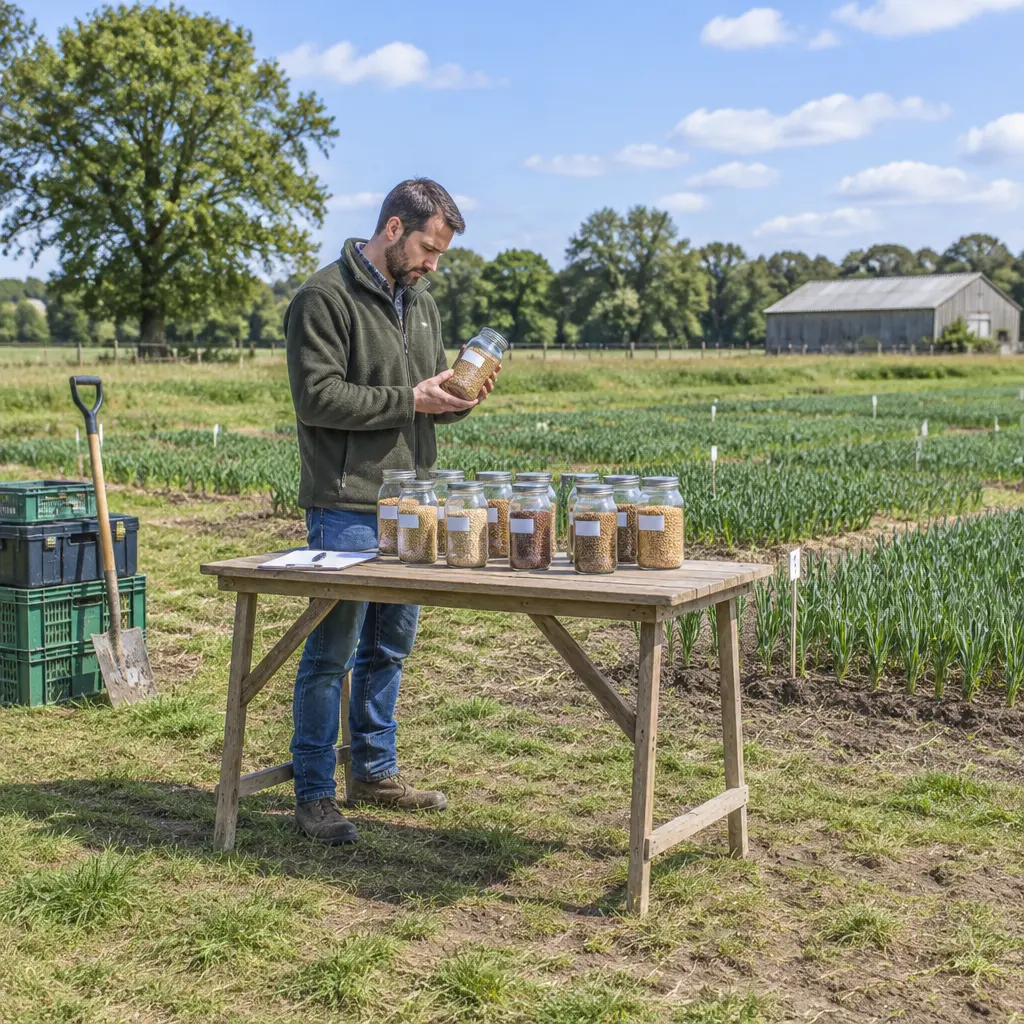
Non-GMO grains and seeds are varieties whose genetic material has not been altered using genetic engineering, although they may still be conventionally bred, hybridized, or organically grown. Demand is fueled by consumer interest in food choice and production methods, retailer and food-company sourcing policies, and concerns about crop diversity and transparency. The market is also shaped by practical realities: “non-GMO” is not the same as “organic,” GMO rules vary by country, and most acreage for major genetically engineered crops is concentrated in a few commodities. Understanding these distinctions helps explain how certification, seed availability, farming systems, and labeling influence demand.
Non-GMO Grains and Seeds: Definition and Market Context
“Non-GMO” generally describes a crop or food produced without genetic engineering as defined by the relevant labeling or certification system. The U.S. Department of Agriculture’s National Bioengineered Food Disclosure Standard uses “bioengineered” for foods containing detectable genetic material modified through certain laboratory techniques and not achievable through conventional breeding or found in nature. Definitions and labeling requirements differ internationally, so the term is best understood in relation to a specific standard or market.
The term covers many crop types, including wheat, oats, rice, barley, millet, quinoa, corn, soybeans, sunflower, and vegetable or oilseed crops. But a non-GMO claim does not by itself say whether a crop is organic, pesticide-free, locally grown, or more nutritious. Organic standards prohibit genetic engineering, while non-GMO products can be conventionally farmed and may use permitted synthetic crop-protection products.
Scale helps put the issue in perspective. The U.S. Department of Agriculture’s Economic Research Service reported that genetically engineered varieties accounted for about 94% of U.S. soybean acreage, 96% of cotton acreage, and 93% of corn acreage in 2024. Those figures concern adoption of engineered varieties in three major crops—not the share of all food that is genetically engineered. They help explain why buyers seeking non-GMO corn or soy often rely on identity-preserved sourcing and verification.
Consumer Demand Drives Non-GMO Grain and Seed Purchasing
Demand refers to consumers’ and commercial buyers’ willingness to choose and pay for products made from crops that meet non-GMO requirements. It is not one uniform preference: shoppers may prioritize production transparency, specific ingredients, farming practices, or a trusted certification mark. Food manufacturers and retailers can also create demand by setting sourcing specifications for ingredients and private-label products.
Transparency, choice, and labeling
Labeling gives shoppers a way to identify products that meet a defined production standard. In the United States, the USDA’s National Bioengineered Food Disclosure Standard took effect in 2022 and requires disclosure for covered foods that meet its criteria, subject to exemptions and specific rules. This is a bioengineered-food disclosure system, not a comprehensive certification of every product marketed as non-GMO. Voluntary claims and third-party verification therefore remain important to buyers looking for additional assurance.
One prominent voluntary program is the Non-GMO Project Verified seal. The organization’s verification standard covers ingredient risk assessment, traceability, and testing where applicable. A label can reduce the effort involved in researching ingredients, but consumers should check what a particular seal verifies and whether it applies to the product, individual ingredients, or both.
Food preferences and perceived value
Some buyers choose non-GMO foods because they want to avoid genetic engineering, support a particular production approach, or have more information about how ingredients are sourced. These are consumer preferences, not proof that non-GMO foods are inherently safer or more nutritious. The U.S. National Academies of Sciences, Engineering, and Medicine concluded in its 2016 review that it found no substantiated evidence that foods from currently commercialized genetically engineered crops were less safe than foods from non-engineered crops.
Perceived value also interacts with price, availability, and trust. If a non-GMO grain is scarce, a buyer may pay more for segregated supplies and documentation. Conversely, a claim may carry little value for consumers unless the standard is clear and credible. These factors help explain why interest in non-GMO products can coexist with scientific assessments of the safety of approved genetically engineered foods.
Supply Chains Support Non-GMO Grain and Seed Availability
Non-GMO supply chains are systems for keeping qualifying crops identifiable and separate from crops that do not meet a buyer’s specifications. Separation may begin with seed sourcing and continue through planting, harvest, storage, transport, processing, and recordkeeping. It is especially relevant for crops such as corn and soy, where genetically engineered varieties make up a large share of U.S. acreage.
Identity preservation and testing
Identity preservation means maintaining records and controls that link a crop to its seed, field, and handling history. Producers and handlers may use dedicated storage, cleaning protocols, lot documentation, sampling, and laboratory tests to meet a buyer’s threshold. Testing can help verify a shipment, but it does not replace good segregation practices: a sample represents only the material tested, and results depend on sampling design and detection limits.
These controls add cost and complexity. The Non-GMO Project’s standard, for example, uses a risk-based approach to identify ingredients that may require testing or additional controls. The exact requirements depend on the crop, product, certification program, and destination market; “non-GMO” should not be assumed to mean zero detectable presence under every standard.
Retailer and manufacturer sourcing policies
Commercial buyers can increase demand by specifying non-GMO ingredients for branded or private-label products. A food company may request verified cornmeal, soy lecithin, canola oil, or seed ingredients, prompting suppliers to arrange compliant contracts and handling. Such policies can give growers access to differentiated markets, but the premium, if any, depends on crop supply, contract terms, verification expenses, and local infrastructure.
This commercial demand also shapes which seed varieties are multiplied and sold. Seed companies and distributors have incentives to maintain non-GMO options when growers and buyers can coordinate enough volume to make production and segregation viable.
Non-GMO Seeds Connect Demand with Farming and Crop Diversity
Seed demand influences what farmers can plant and which varieties breeders maintain. Non-GMO seeds include open-pollinated varieties, conventionally bred hybrids, and heritage or locally adapted lines, provided they have not been produced using genetic engineering covered by the applicable standard. The category therefore describes a breeding method boundary, not a single type of seed or farming system.
Seed choice and farmer access
Farmers choose seed based on traits such as maturity, yield potential, disease resistance, climate fit, market requirements, and input costs. Non-GMO seed demand can preserve options for growers serving organic, export, identity-preserved, or consumer-facing markets. Availability may be more limited for certain crops and regions, so buyers and farmers often need to plan contracts and seed orders ahead of planting.
Non-GMO status alone does not predict agronomic performance. A conventionally bred variety may perform well or poorly depending on its genetics and growing conditions. Farmers should compare local trial results, extension recommendations, seed quality, and the requirements of the market they intend to serve.
Crop diversity and genetic resources
Crop diversity includes the range of species and genetic variation used in agriculture. Demand for niche grains and regionally adapted seeds may create markets for crops beyond a narrow set of commodity varieties, potentially supporting seed saving, specialty milling, and local breeding. However, purchasing non-GMO seed does not automatically conserve biodiversity; conservation also depends on what farmers grow, how varieties are maintained, and whether diverse seed resources remain accessible.
The Food and Agriculture Organization of the United Nations identifies genetic resources for food and agriculture as important to crop improvement and adaptation. Maintaining diverse varieties can give breeders and farmers more options as pests, diseases, and growing conditions change. Non-GMO demand can contribute when it supports diverse crops and breeding programs, but it is only one part of a broader conservation strategy.
Non-GMO and Organic Standards Address Different Attributes
Non-GMO and organic are related but distinct claims. USDA organic rules prohibit the use of genetic engineering, but organic certification also governs a broader production system, including permitted inputs, soil-management practices, and handling. A non-GMO product may be grown conventionally, while an organic product must meet the applicable organic standard in addition to being non-GMO under that standard.
What each claim tells buyers
A non-GMO claim focuses on how the crop was bred or produced with respect to genetic engineering. An organic claim communicates compliance with an established set of production and handling requirements. Neither label, on its own, guarantees that a food is local, pesticide-free, more nutritious, or environmentally superior in every respect. Consumers can compare certification rules and product details to decide which attributes matter to them.
Why the distinction matters in the market
Clear distinctions help prevent misleading assumptions and support informed purchasing. For producers, choosing organic certification usually involves a wider set of requirements than meeting a non-GMO specification alone. For manufacturers, the distinction affects ingredient sourcing, audits, packaging language, and the evidence needed to substantiate a claim.
Challenges and Trade-Offs in Meeting Non-GMO Demand
Meeting demand can require extra coordination and verification, and the benefits vary by crop and market. The central trade-off is between consumer choice and the operational costs of keeping crop streams separate. These costs can influence farm-gate prices, product availability, and which businesses can participate.
Cost, access, and supply constraints
Dedicated storage, cleaning, testing, documentation, and certification can raise the cost of supplying non-GMO ingredients. Smaller farms may face barriers if nearby elevators or processors do not offer segregated handling. A premium is not guaranteed: it depends on demand, competing supplies, contract design, and the cost of compliance.
Coexistence and unintended mixing
Different production systems may operate in the same agricultural region. Pollen movement, volunteer plants, shared equipment, and transport or storage practices can create a risk of unintended mixing, with the level of risk varying by crop biology and farm layout. Measures such as communication between neighboring growers, cleaning equipment, buffer practices where appropriate, and careful handling can help manage that risk.
Claims, evidence, and consumer understanding
Marketing claims should be supported by records and match the governing standard. Confusion can arise when consumers interpret “non-GMO” as a guarantee of superior health or environmental outcomes. The National Academies’ assessment of currently commercialized genetically engineered foods is a useful reminder that breeding method and food safety are separate questions; product-specific evidence and the broader production context should be considered independently.
Conclusion: Why Non-GMO Grains and Seeds Remain in Demand
Demand for non-GMO grains and seeds reflects consumer preferences, retailer and manufacturer sourcing decisions, and farmers’ interest in serving differentiated markets. Labels and verification help communicate production attributes, while identity-preserved supply chains make it possible to keep qualifying crops traceable. Seed choice can also support access to different varieties, although non-GMO status alone does not guarantee diversity, organic production, or superior nutrition.
The broader implication is that food systems need credible information and practical ways for different production models to coexist. Consumers can review certification standards rather than relying on a claim alone; growers can assess local seed performance and buyer requirements; and businesses can invest in transparent sourcing and handling. For further reading, consult USDA guidance on bioengineered-food disclosure and organic standards, the National Academies’ review of genetically engineered crops, and the FAO’s work on genetic resources for food and agriculture.
Sources: USDA Economic Research Service, Adoption of Genetically Engineered Crops in the U.S., https://www.ers.usda.gov/data-products/adoption-of-genetically-engineered-crops-in-the-u-s/; USDA Agricultural Marketing Service, National Bioengineered Food Disclosure Standard, https://www.ams.usda.gov/rules-regulations/be; USDA Agricultural Marketing Service, Organic Standards, https://www.ams.usda.gov/grades-standards/organic-standards; Non-GMO Project, Non-GMO Project Standard, https://www.nongmoproject.org/product-verification/non-gmo-project-standard/; National Academies of Sciences, Engineering, and Medicine, Genetically Engineered Crops: Experiences and Prospects, 2016, https://nap.nationalacademies.org/catalog/23395/genetically-engineered-crops-experiences-and-prospects; Food and Agriculture Organization of the United Nations, The Second Report on the State of the World’s Plant Genetic Resources for Food and Agriculture, 2010, https://www.fao.org/4/i1500e/i1500e00.htm